Type of Publication

Conference Papers

Date:

9 /

2026

Status

Accepted

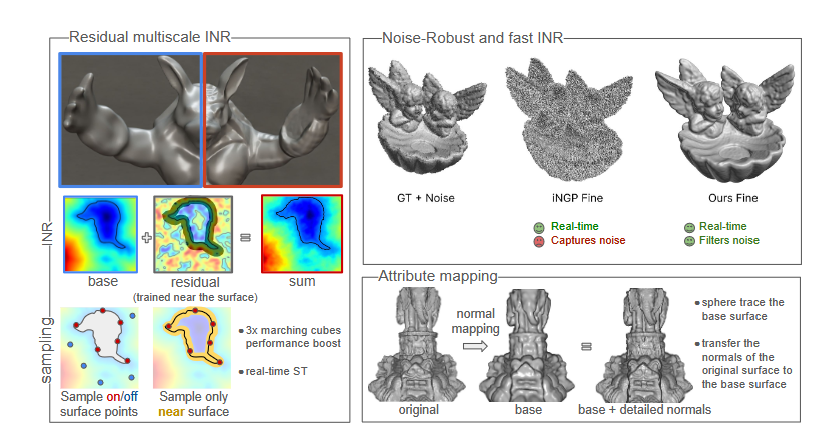
M-plicits: Neural Implicit Surfaces via Nested Multiscale Residuals

Featured in:

Accepted for NeurIPS2026

Authors:

Vinícius da Silva; Isabelle Melo; Matheus Bessa; Guilherme Schardong; Luiz Schirmer,;André Araújo; Nuno Gonçalves; Hélio Lopes; Alberto Raposo; Luiz Velho; Tiago Novello

Abstract

Encoding input coordinates with sinusoidal functions into multi-layer perceptrons (MLPs) has proven effective for implicit neural representations (INRs) of surfaces defined as zero-level sets. However, existing methods often struggle to balance training efficiency, rendering speed, and noise robustness: single-MLP approaches are expensive at inference, grid-based representations are fast but can limit surface smoothness and overfit input noise, and previous multiscale approaches frequently capture noise and produce artifacts due to hard spectral truncation. To address these limitations, we propose M-plicits, a multiscale framework that models surfaces as a residual sum of MLPs trained via a sequence of nested neighborhoods. Unlike existing residual approaches that rely on standard domain-wide sampling and require costly mesh extraction for visualization, our method strictly localizes supervision to narrow bands around the previous zero-level sets. This nested design naturally provides robustness against noisy input data: the coarse network acts as a low-pass filter that establishes a clean geometric prior, while subsequent residuals progressively refine the geometry without fitting to high-frequency artifacts. We further introduce a multiscale sphere-tracing algorithm and a GEMM-based analytical normal computation that bypasses auto-differentiation entirely, yielding high-fidelity real-time rendering. On Stanford and Thingi32, M-plicits achieves the best mean Chamfer distance in the coarse configuration and the best median Chamfer distance and IoU in the fine configuration, with substantially better noise robustness than iNGP, BACON, and IDF, while using an order of magnitude fewer parameters than grid-based baselines. Code, models, and data are available at this https URL. Document can be accessed here.

Citation
V. da Silva, I. Melo, M. Bessa, G. Schardong, L. Schirmer, A. Araújo, N. Gonçalves, H. Lopes, A. Raposo, L. Velho, and T. Novello, “M-plicits: Neural implicit surfaces via nested multiscale residuals,” arXiv:2609.28684, Sep. 2026


Related Content

Researcher Coordinator, VIS TEAM Leader
Post-Doc Researcher
Post-Doc Researcher
No tagged content to show

RECENT PUBLICATIONS

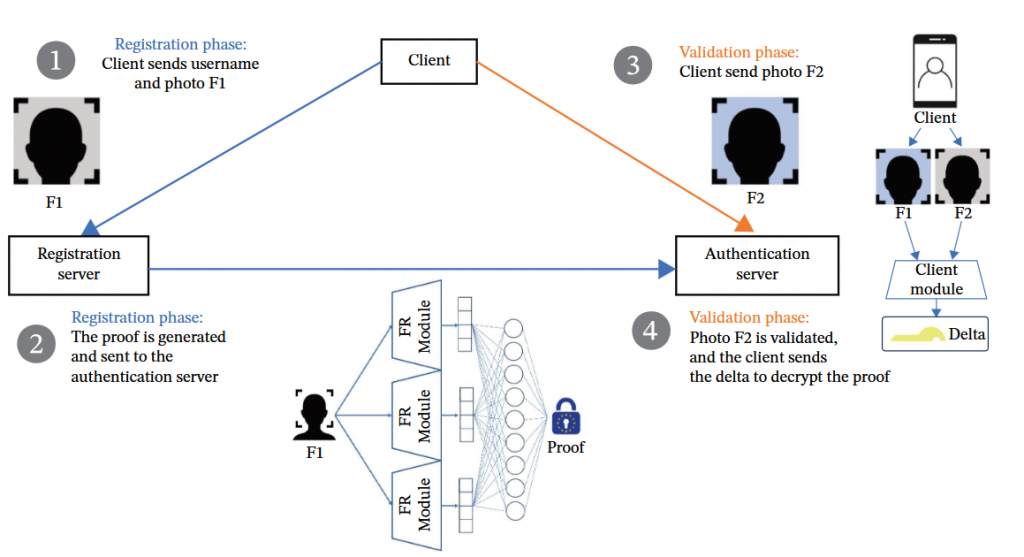
Towards Secure Biometric Solutions: A Multifactor Authentication Framework for Facial Recognition While Protecting User Data

Authors: José Silva; Ajnas Muhammed; Aniana Cruz; Bruno Sousa; Nuno Gonçalves
Featured in: IET Biometrics Volume 2026, Issue 1

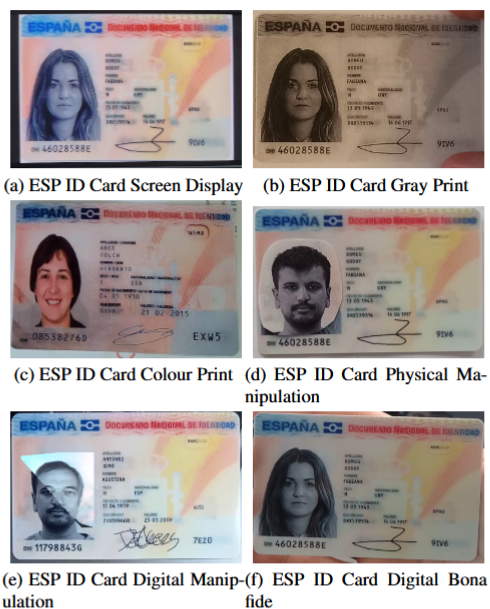
Second Competition on Presentation Attack Detection on ID Card

Authors: Juan E Tapia; Mario Nieto; Juan M Espin; Alvaro S Rocamora; Javier Barrachina; Naser Damer; Christoph Busch; Marija Ivanovska; Leon Todorov; Renat Khizbullin; Lazar Lazarevich; Aleksei Grishin; Daniel Schulz; Sebastian Gonzalez; Amir Mohammadi; Ketan Kotwal; Sebastien Marcel; Raghavendra Mudgalgundurao; Kiran Raja; Patrick Schuch; Sushrut Patwardhan; Raghavendra Ramachandra; Pedro Couto Pereira; Joao Ribeiro Pinto; Mariana Xavier; Andrés Valenzuela; Rodrigo Lara; Borut Batagelj; Marko Peterlin; Peter Peer; Ajnas Muhammed; Diogo Nunes; Nuno Gonçalves
Featured in: 2025 IEEE International Joint Conference on Biometrics

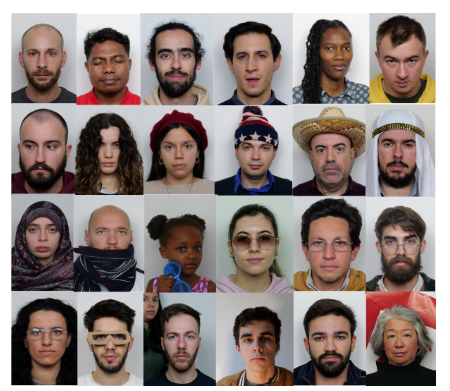
DFIC: Towards a balanced facial image dataset for automatic ICAO compliance verification

Authors: Nuno Gonçalves; Diogo Nunes; Carla Guerra; João Marcos
Featured in: Submited to: ArXiv

suggested news

VIS Team will host a session presenting the...
Paper presented at NeurIPS 2025
VIS Team has presented workshop at the 12th...

RECENT PROJECTS

FACING2 – Face Image Understanding
VISUAL-ID – Unique Visual Identities in Graphics, Images and Faces
UniqueMark

Institute of Systems and Robotics Department of Electrical and Computers Engineering University of Coimbra